scheduling recurrence
Stop a recurring campaign series
Learn how to stop a recurring campaign series with a safe Juniper & Trail example, shopper impact, options, and recovery checks. Stopping a series prevents future occurrences. Early revert on a live recurring occurrence also terminates the series; check history to confirm both the current occurrence and future schedule.
Before you begin
- Confirm the shop timezone and trading windows
- Decide span versus separate daily windows
- Choose how the series stops
Keep the campaign in Draft while you verify the configuration. Use a private storefront window where the guide changes shopper-facing behavior.
Step-by-step setup
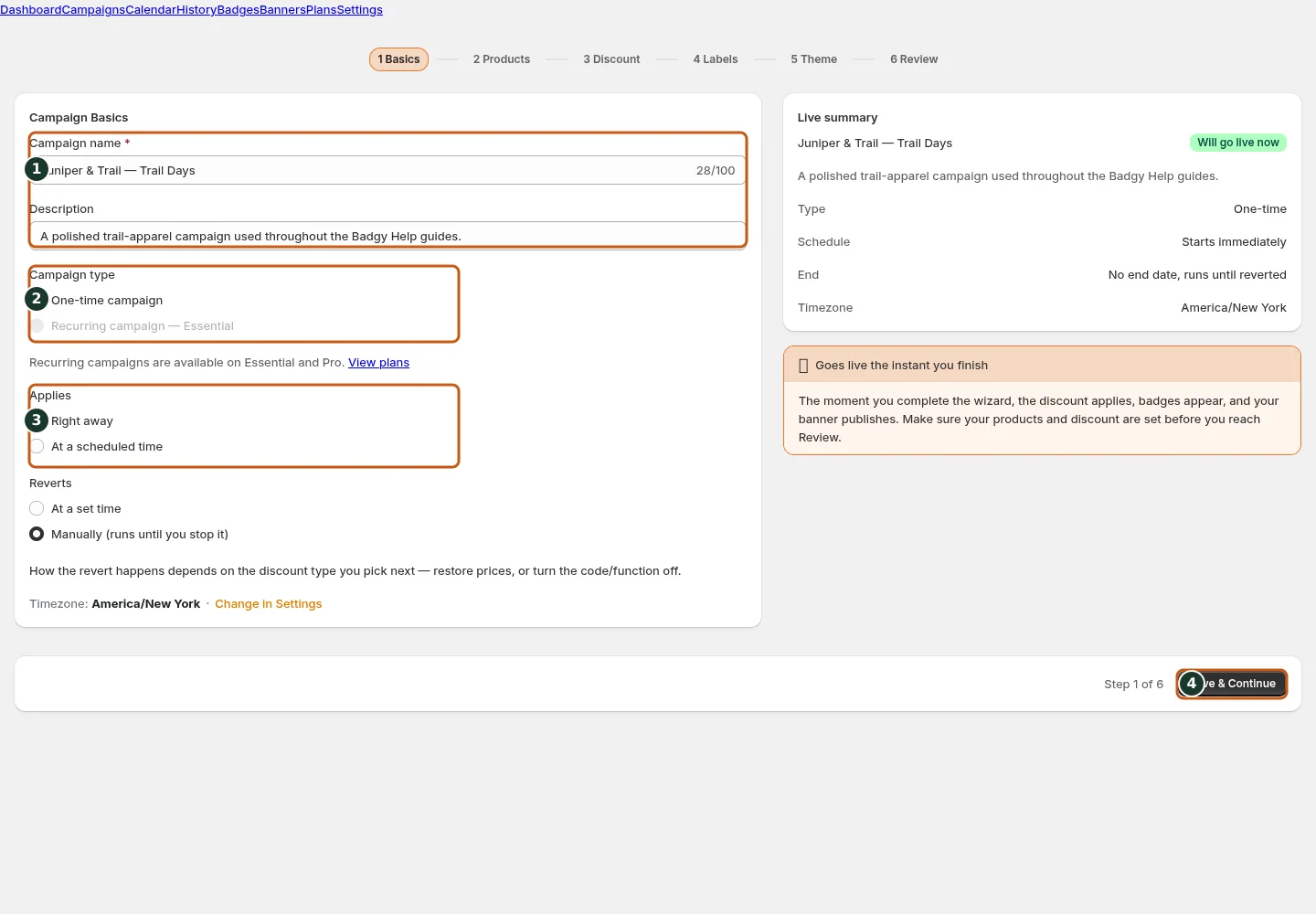
Name and describe the campaign so teammates can identify its purpose.
Choose whether the campaign runs once or repeats on a schedule.
Set when the campaign should begin.
Choose whether the campaign ends automatically or stays open.
Save the basics and continue to the next wizard step.
- Open the recurring parent or current occurrence and inspect whether an occurrence is Active.
- Use the series stop control for future occurrences when no live occurrence needs urgent cleanup.
- If the live occurrence must stop urgently, read Early revert consequences before confirming.
- Wait for the current command to complete.
- Check History for the current occurrence and Calendar to confirm no future occurrence remains.
Stopping a series prevents future occurrences. Early revert on a live recurring occurrence also terminates the series; check history to confirm both the current occurrence and future schedule.
Juniper & Trail example
Juniper & Trail uses stop a recurring campaign series for a repeat trail-hour promotion. The team previews several future occurrences and checks that each occurrence has an apply and revert boundary. The documentation fixture uses realistic products, inventory states, variants, collections, and protected exclusions so the preview exercises the same decisions as a merchant catalog.
What shoppers will see
The promotion turns on and off for each occurrence; there is no intended midnight flicker inside a continuous span. Check the relevant result from product through cart where applicable. For shopper-facing work, compare desktop and mobile and verify both an eligible and an ineligible item.
Common mistakes and troubleshooting
- Acting on the wrong shop. Confirm the Shopify store and campaign before following Stop a recurring campaign series.
- Trusting a stale preview. Refresh after catalog, schedule, discount, theme, locale, or market changes.
- Repeating a background command. Read status and History first; retry only when Badgy presents a recoverable failure.
- Skipping the consequence check. Confirm what changes for shoppers and what the end or restore path will do.
If the status reports revoked authorization, reconnect Shopify before retrying. If the result still differs from the preview, preserve the campaign ID and approximate time, then open support from this identified shop. Never send customer data, access tokens, or full catalog exports in feedback.
Related guides
Options reference
| Option | Use it when | Consequence | | --- | --- | --- | | Stop future series | Prevent new occurrences | Does not invent a restore | | Normal end | Fully end current occurrence | Uses full revert | | Early revert | Urgent live stop | Terminates series; direct prices remain until restore |
Badgy behavior in this guide is reviewed against the repository's shipped UI, service rules, and feature design documents. Shopify-owned theme, Markets, Flow, billing, and discount behavior can also depend on the store's Shopify configuration; consult the Shopify Help Center for that platform configuration.