badges labels
Save and reuse badge templates
Learn how to save and reuse badge templates with a safe Juniper & Trail example, shopper impact, options, and recovery checks. Saving a badge template preserves reusable design configuration, not a live campaign assignment. After selecting a saved template, review tokens, stage content, placement, and scale for the new campaign.
Before you begin
- Enable storefront rendering and identify the product-card layouts to test
- Choose text or image artwork
- Prepare Normal, Low stock, and Sold out messaging when stages are used
Keep the campaign in Draft while you verify the configuration. Use a private storefront window where the guide changes shopper-facing behavior.
Step-by-step setup
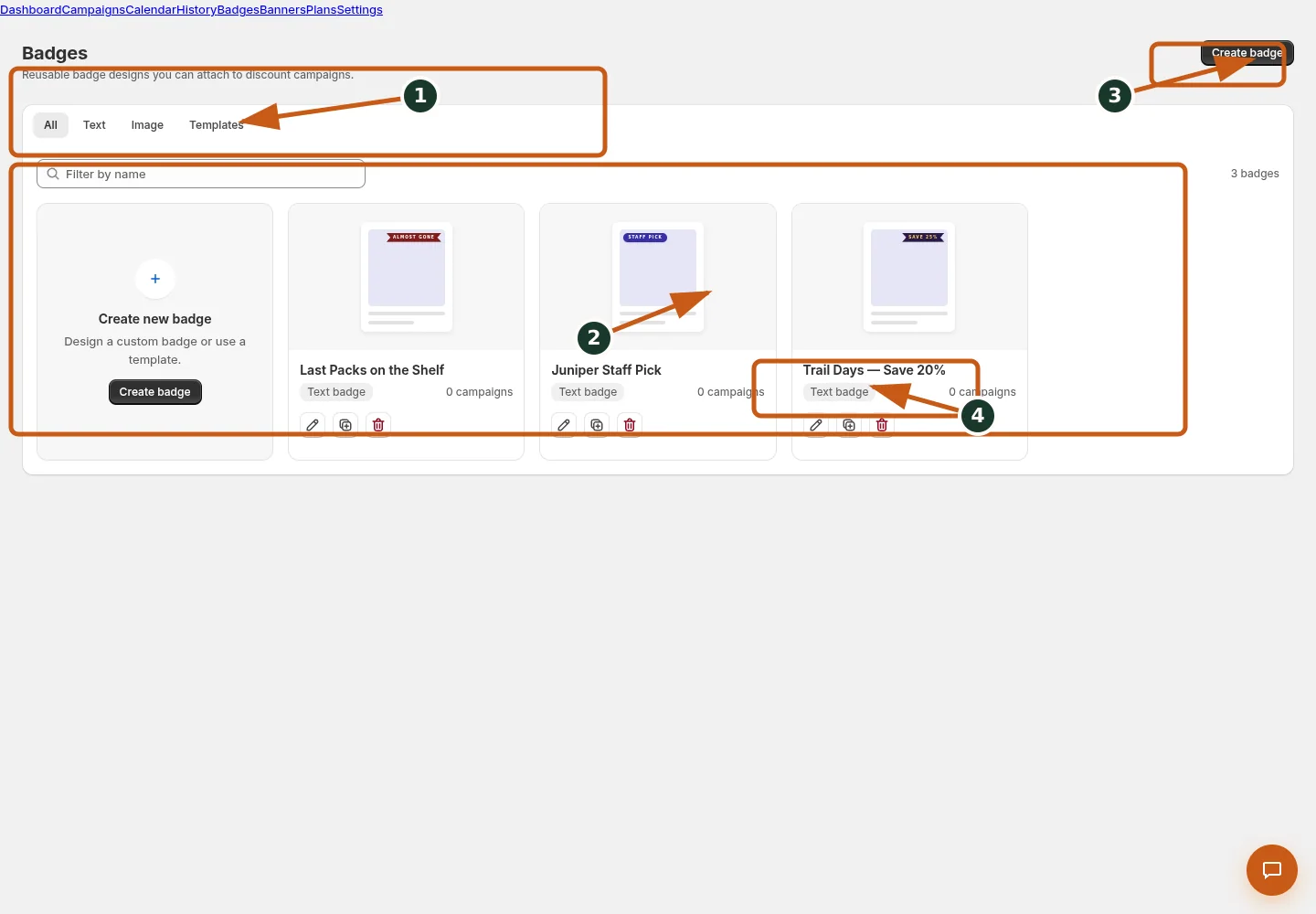
Filter reusable badges by type or search by name.
Compare existing badge cards, previews, types, and campaign usage.
Create a reusable badge when no existing design fits.
Edit, duplicate, or delete a badge from its card actions.
- From Badges, save a completed text or image design with a purpose-based name.
- Search saved badges and inspect type plus preview.
- Choose Use template to copy it into a new badge/campaign label.
- Recheck variables, inventory stages, placement, and current product previews.
- Edit the new configuration without assuming the source template changed.
Saving a badge template preserves reusable design configuration, not a live campaign assignment. After selecting a saved template, review tokens, stage content, placement, and scale for the new campaign.
Juniper & Trail example
Juniper & Trail applies save and reuse badge templates to the Ridgeway Waxed Field Jacket. The team checks a bright lifestyle image, a dark pack shot, collection cards, and the product page. The documentation fixture uses realistic products, inventory states, variants, collections, and protected exclusions so the preview exercises the same decisions as a merchant catalog.
What shoppers will see
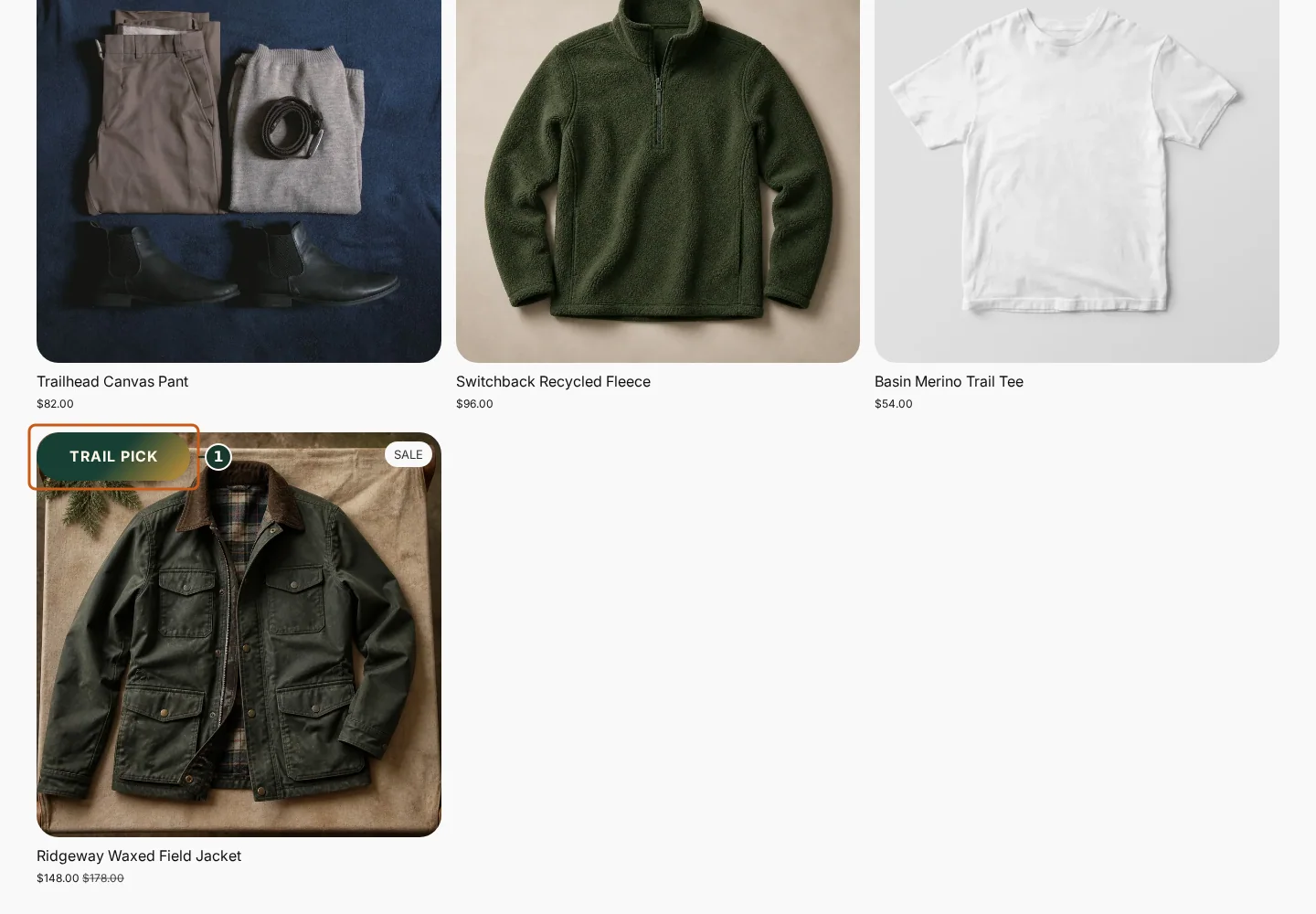
Confirm the campaign announcement and Shop call to action at the top of the store.
Check the badge and adjusted pricing on an eligible product card.
Compare another product card to verify consistent campaign treatment.
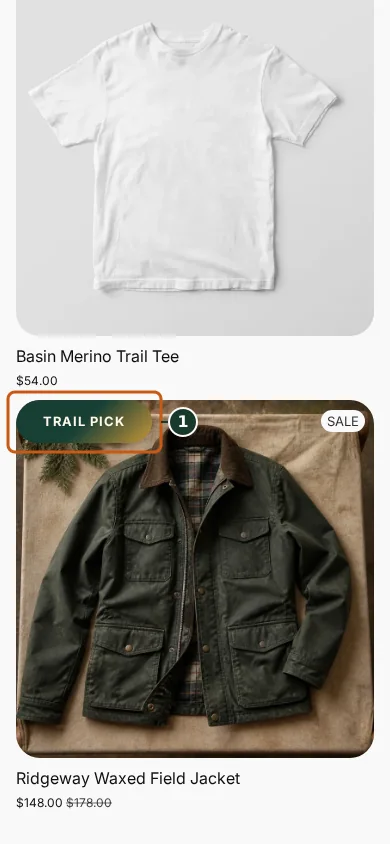
Confirm the campaign announcement and Shop call to action fit the mobile header.
Check that the badge remains readable on the mobile product card.
Scroll through additional products to verify the collection layout stays usable.
The badge overlays eligible product media. Its final size and crop depend on the theme's product-card and media containers. Check the relevant result from product through cart where applicable. For shopper-facing work, compare desktop and mobile and verify both an eligible and an ineligible item.
Common mistakes and troubleshooting
- Acting on the wrong shop. Confirm the Shopify store and campaign before following Save and reuse badge templates.
- Trusting a stale preview. Refresh after catalog, schedule, discount, theme, locale, or market changes.
- Repeating a background command. Read status and History first; retry only when Badgy presents a recoverable failure.
- Checking only one viewport. Verify desktop and mobile in a private storefront window.
If the status reports revoked authorization, reconnect Shopify before retrying. If the result still differs from the preview, preserve the campaign ID and approximate time, then open support from this identified shop. Never send customer data, access tokens, or full catalog exports in feedback.
Related guides
Options reference
| Option | Use it when | Consequence | | --- | --- | --- | | Save template | Reuse a reviewed design | Stores configuration | | Use template | Create from saved design | Campaign-specific review required | | Text / Image filter | Find matching asset | Type remains explicit |
Badgy behavior in this guide is reviewed against the repository's shipped UI, service rules, and feature design documents. Shopify-owned theme, Markets, Flow, billing, and discount behavior can also depend on the store's Shopify configuration; consult the Shopify Help Center for that platform configuration.