templates assets
Manage saved badge templates
Learn how to manage saved badge templates with a safe Juniper & Trail example, shopper impact, options, and recovery checks. The badge library stores reusable text and image configurations. Name templates by purpose, preview all inventory stages, and treat campaign assignments as copies that still need review.
Before you begin
- Confirm the asset is approved for storefront use
- Know which campaigns depend on it
- Keep source artwork and licensing records
Confirm the shop, current status, and intended consequence before changing anything. Use read-only status, preview, or history evidence first.
Step-by-step setup
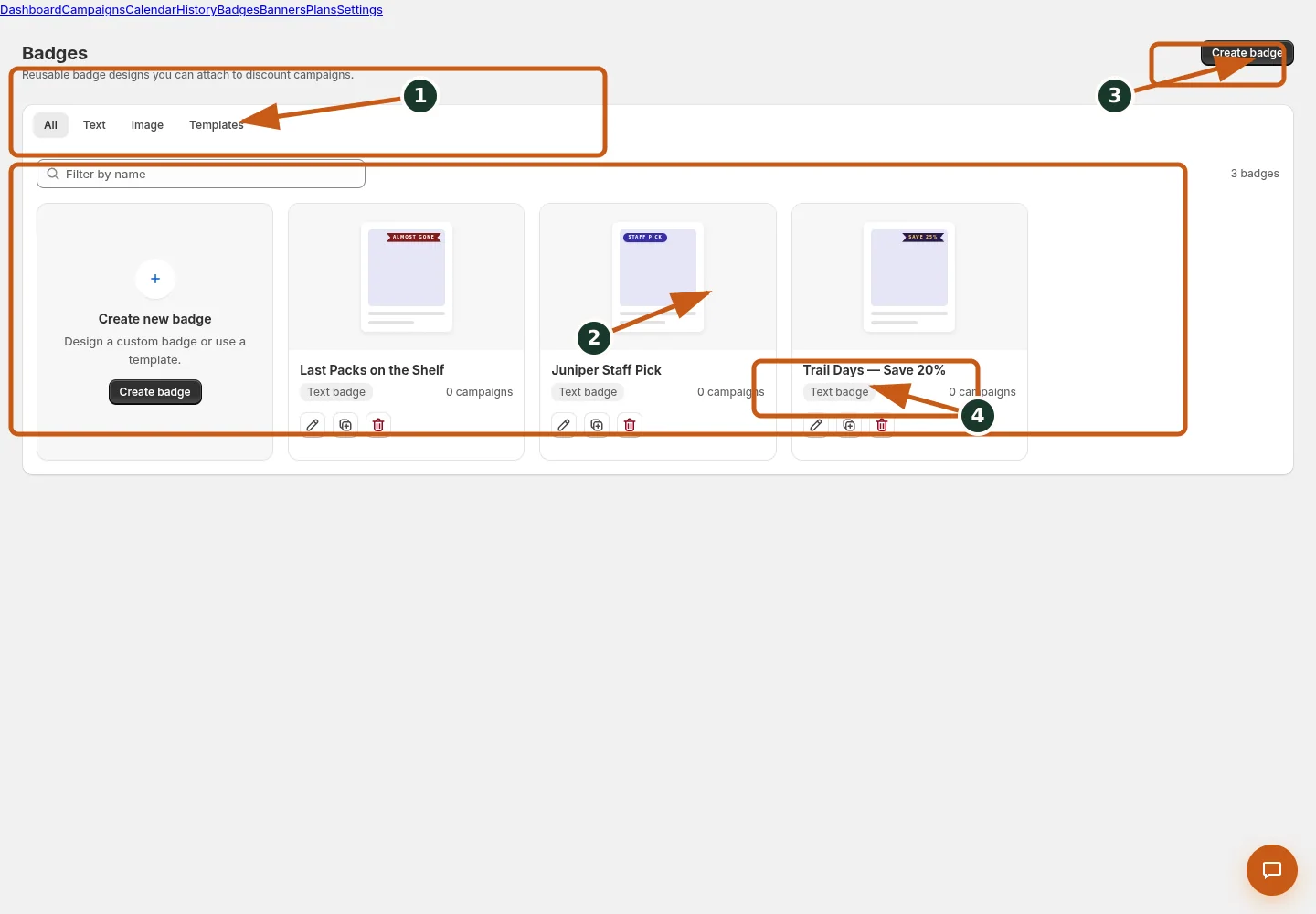
Filter reusable badges by type or search by name.
Compare existing badge cards, previews, types, and campaign usage.
Create a reusable badge when no existing design fits.
Edit, duplicate, or delete a badge from its card actions.
- Open Badges for the intended shop and confirm the current record and status.
- Create or open a saved Text/Image badge, name it by reusable purpose, and verify content, stages, slot, placement, and preview before Save.
- Read the inline summary, warning, or preflight before submitting; do not repeat a command while background work is running.
- Use the template in a fresh draft and recheck context-dependent tokens and product imagery.
- Confirm the resulting status and History/audit evidence, then spot-check Shopify or the storefront when the action has external effects.
The badge library stores reusable text and image configurations. Name templates by purpose, preview all inventory stages, and treat campaign assignments as copies that still need review.
Juniper & Trail example
Juniper & Trail names the reusable item Trail Weekend — Manage saved badge templates and tests it in a fresh draft rather than changing the active campaign. The documentation fixture uses realistic products, inventory states, variants, collections, and protected exclusions so the preview exercises the same decisions as a merchant catalog.
What shoppers will see
Templates are not visible by themselves; shoppers see the campaign-specific configuration created from them. Check the relevant result from product through cart where applicable. For shopper-facing work, compare desktop and mobile and verify both an eligible and an ineligible item.
Common mistakes and troubleshooting
- Acting on the wrong shop. Confirm the Shopify store and campaign before following Manage saved badge templates.
- Trusting a stale preview. Refresh after catalog, schedule, discount, theme, locale, or market changes.
- Repeating a background command. Read status and History first; retry only when Badgy presents a recoverable failure.
- Skipping the consequence check. Confirm what changes for shoppers and what the end or restore path will do.
If the status reports revoked authorization, reconnect Shopify before retrying. If the result still differs from the preview, preserve the campaign ID and approximate time, then open support from this identified shop. Never send customer data, access tokens, or full catalog exports in feedback.
Related guides
Options reference
| Option | Use it when | Consequence | | --- | --- | --- | | Text template | Reusable styled copy | Tokens resolve per campaign/product | | Image template | Gallery/upload/AI artwork | Rights and crop remain relevant | | Use template | Copy configuration | Does not activate it |
Badgy behavior in this guide is reviewed against the repository's shipped UI, service rules, and feature design documents. Shopify-owned theme, Markets, Flow, billing, and discount behavior can also depend on the store's Shopify configuration; consult the Shopify Help Center for that platform configuration.